


 Use symbols for index/next/previous/zoom in/zoom out/chart
Use symbols for index/next/previous/zoom in/zoom out/chart
Use symbols for index/next/previous/zoom in/zoom out/chart
| Nebula | PK053-03.2 | RA (J2000) | 19 41 57.0 |
| Constellation | Sagitta | Dec | +16 44 39.8 |
| Size (arcsec) | stellar | Other names | PK 053-03.2 |
| Mag (V) | n/a | HM Sge | |
| Surface Brightness (mag/arcsec2) | n/a | (N 1975) |
| Mouse over image for object information. |
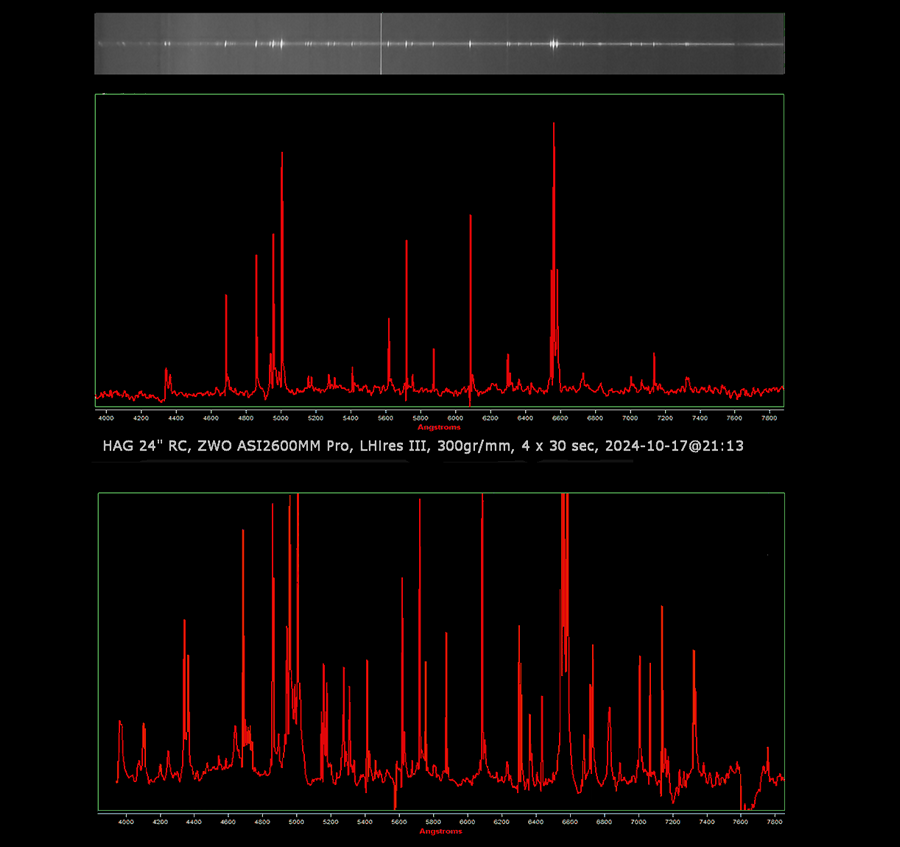
| HAG 24" RC, ZWO ASI2600MM Pro, Lhires III, 300 gr/mm, 4 x 30 + 3 x 600 sec, 2024-10-17@22:30 |
This star is reported as a symbiotic star. A white dwarf or neutron star with a red giant companion will accrete material from the companion onto its surface and if this interaction can be detected spectroscopically it is termed a Symbiotic Star. In the majority of such systems known, nuclear reactions take place in the accreted material at the surface the white dwarf and the resulting high temperature (100,000 K) allows ionization of a large fraction of the cool giant's wind producing an emission spectrum.
This object has been the subject of several research projects since it went nova in 1975. Use PgUp, PgDown keys to zoom spectrum images |
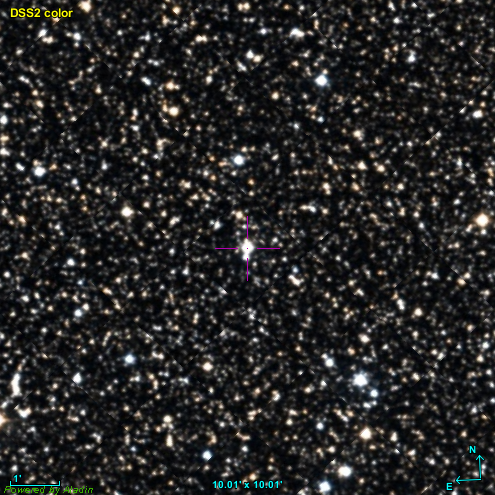
DSS2 image, 10 arcmin square
 |
165 / 209 (pg 83) |